Finding the Sky Inside: A Studio Alaya Reflection on India’s Courtyards
In the Indian subcontinent, the courtyard has never been just an architectural device—it has been the emotional and climatic anchor of a home. Across regions and cultures, this open void has shaped how families lived, interacted, and found comfort within their built environments. From the shaded havelis of Rajasthan to the timber-lined nalukettu houses of Kerala, the courtyard stands as a constant reminder that climate, culture, and community were once inseparable in the way we built.
Urbanization, however, has pushed this element to the margins. In many contemporary homes, courtyards either vanish entirely or return as a symbolic gesture. But their relevance—spatially, socially, and climatically—has only grown stronger.
The Space Where Life Gathers
Many of us grew up without knowing the vocabulary for architecture, but we understood how a space made us feel. The warmth on the floor, the quiet drift of daylight, the sense of the house opening to the sky—these impressions stayed long before we knew what a courtyard was.
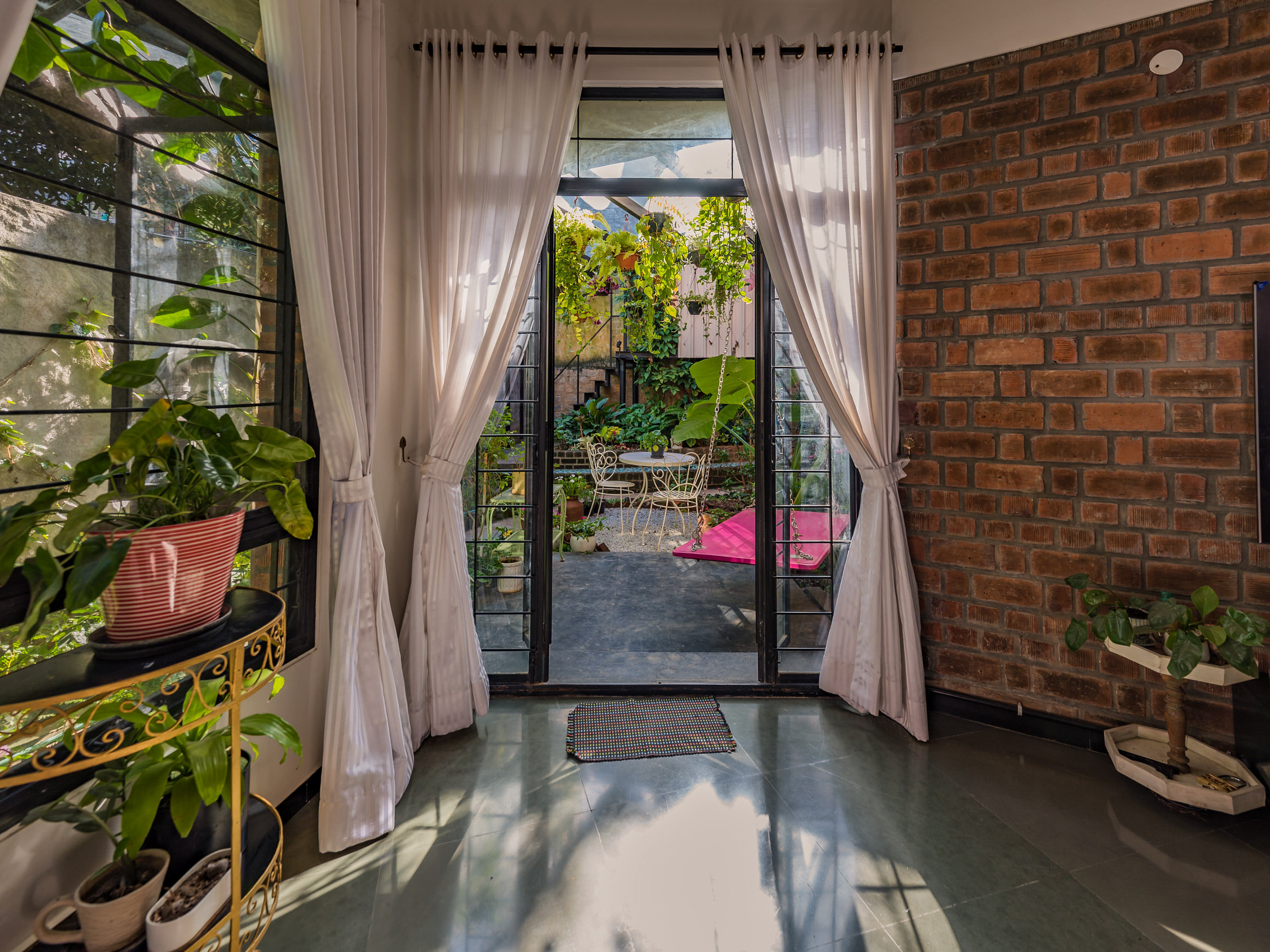
In practice, I often return to these early memories to understand why certain spaces feel complete. The courtyard consistently emerges as the place where the home breathes—where transitions soften, where movement feels organic, and where light becomes a daily companion.
What Indian Vernacular Architecture Has Always Known
Travel across India, and you will find various interpretations of the courtyard responding intelligently to climate and culture:
In Rajasthan, courtyards temper harsh dry heat with still pools of cool air.
In Kerala, the nadumuttam collects light and releases humidity during monsoon months.
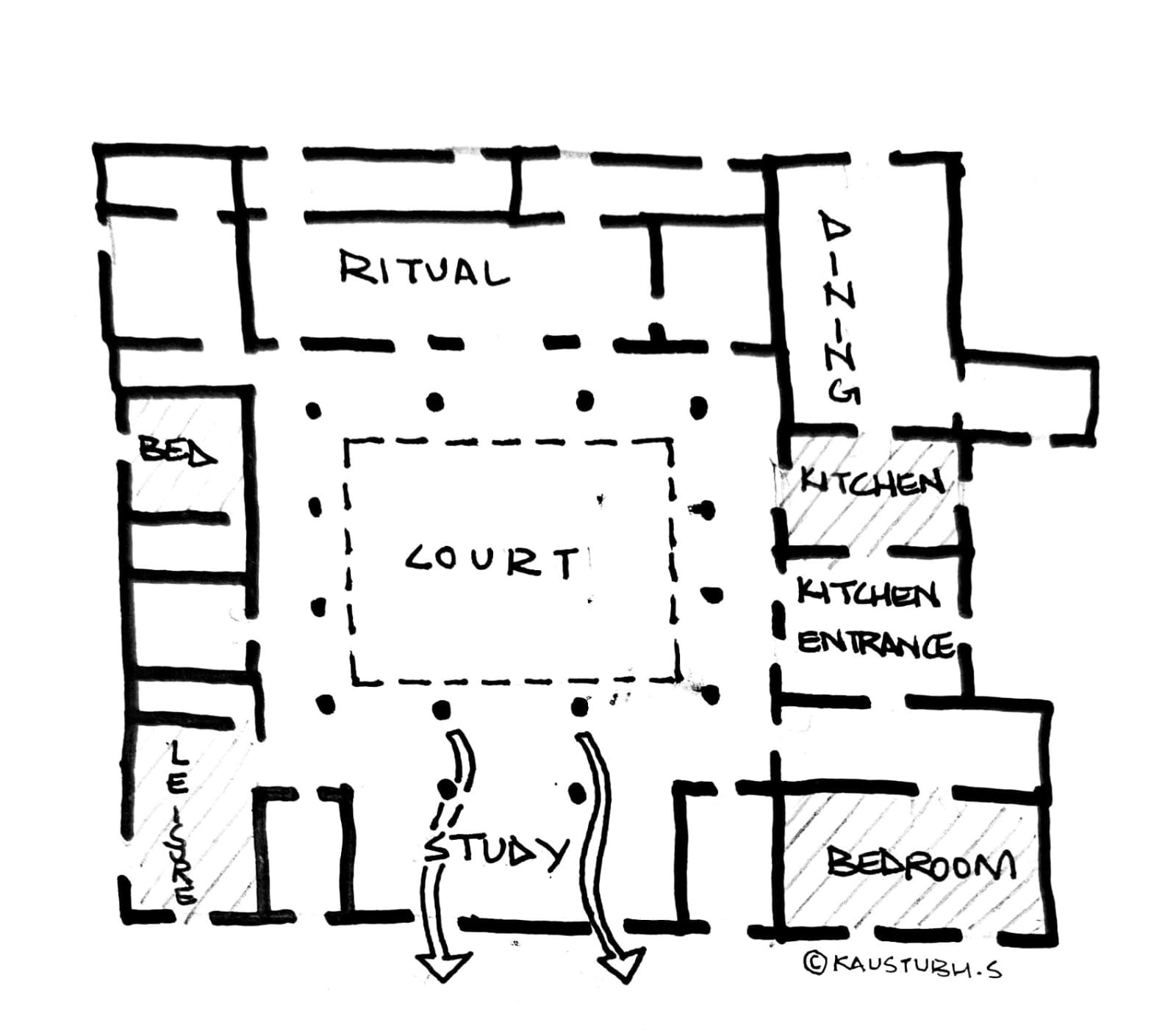
In Maharashtra, the wada’s courtyard becomes a shared heart around which rooms and corridors naturally align.
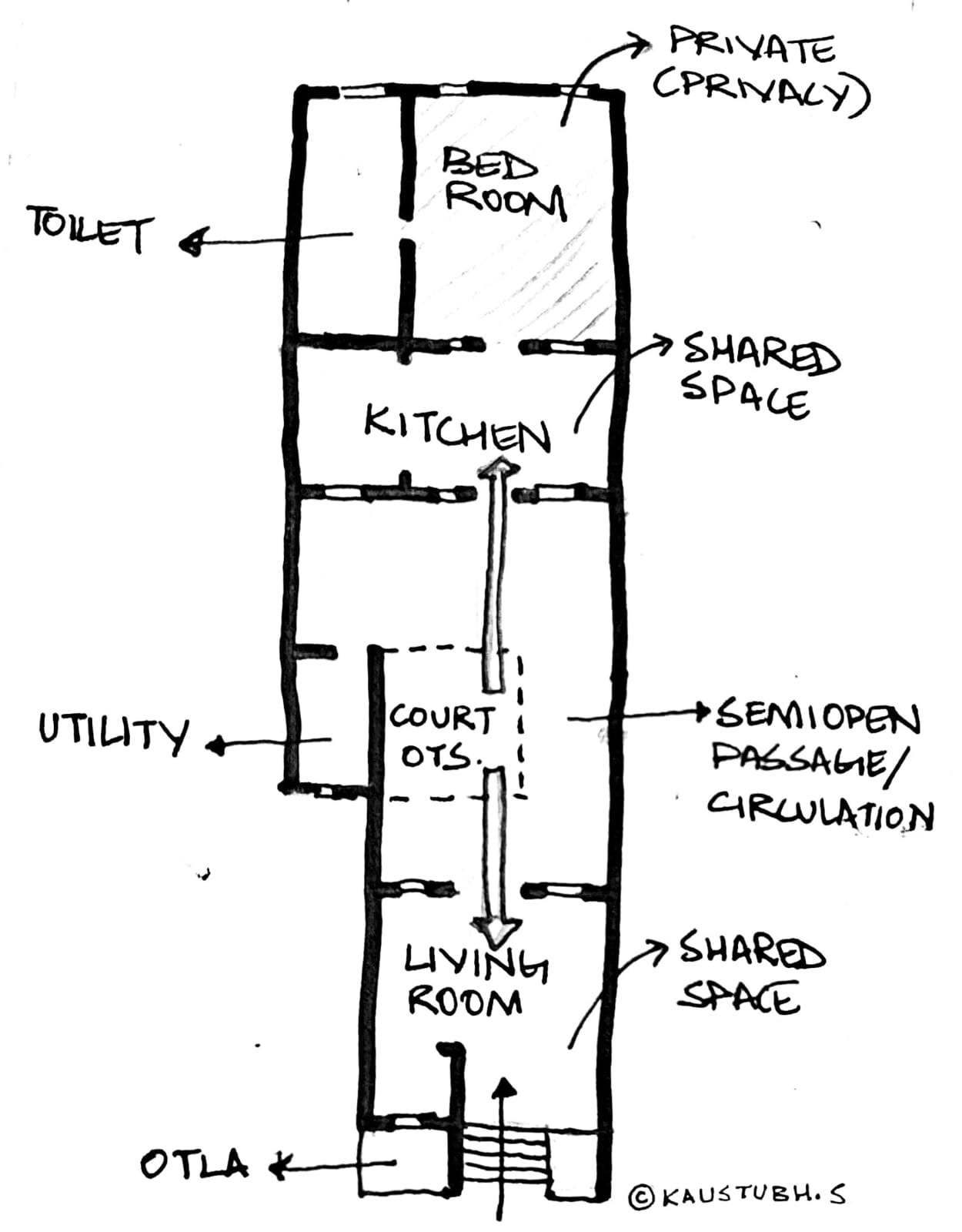
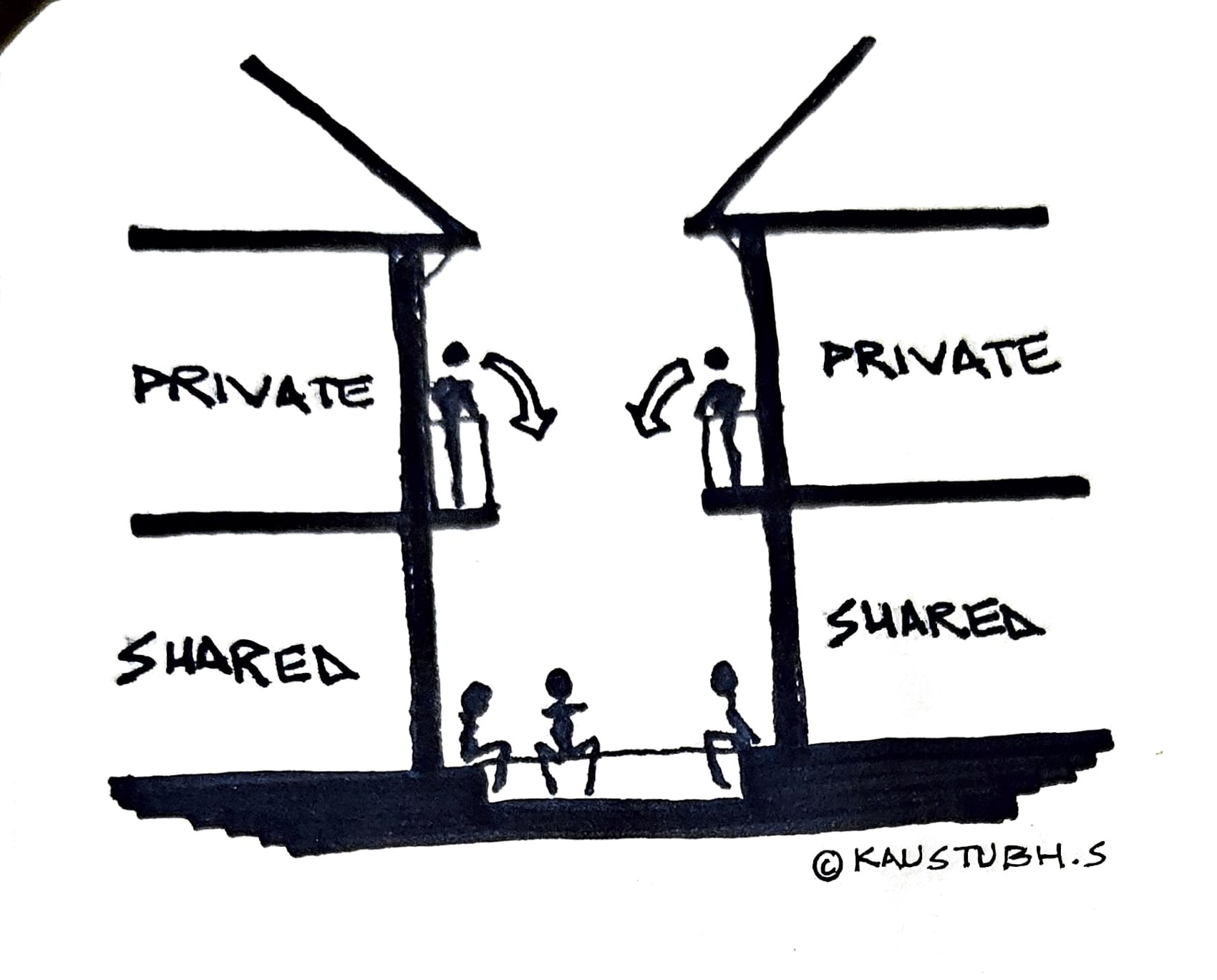
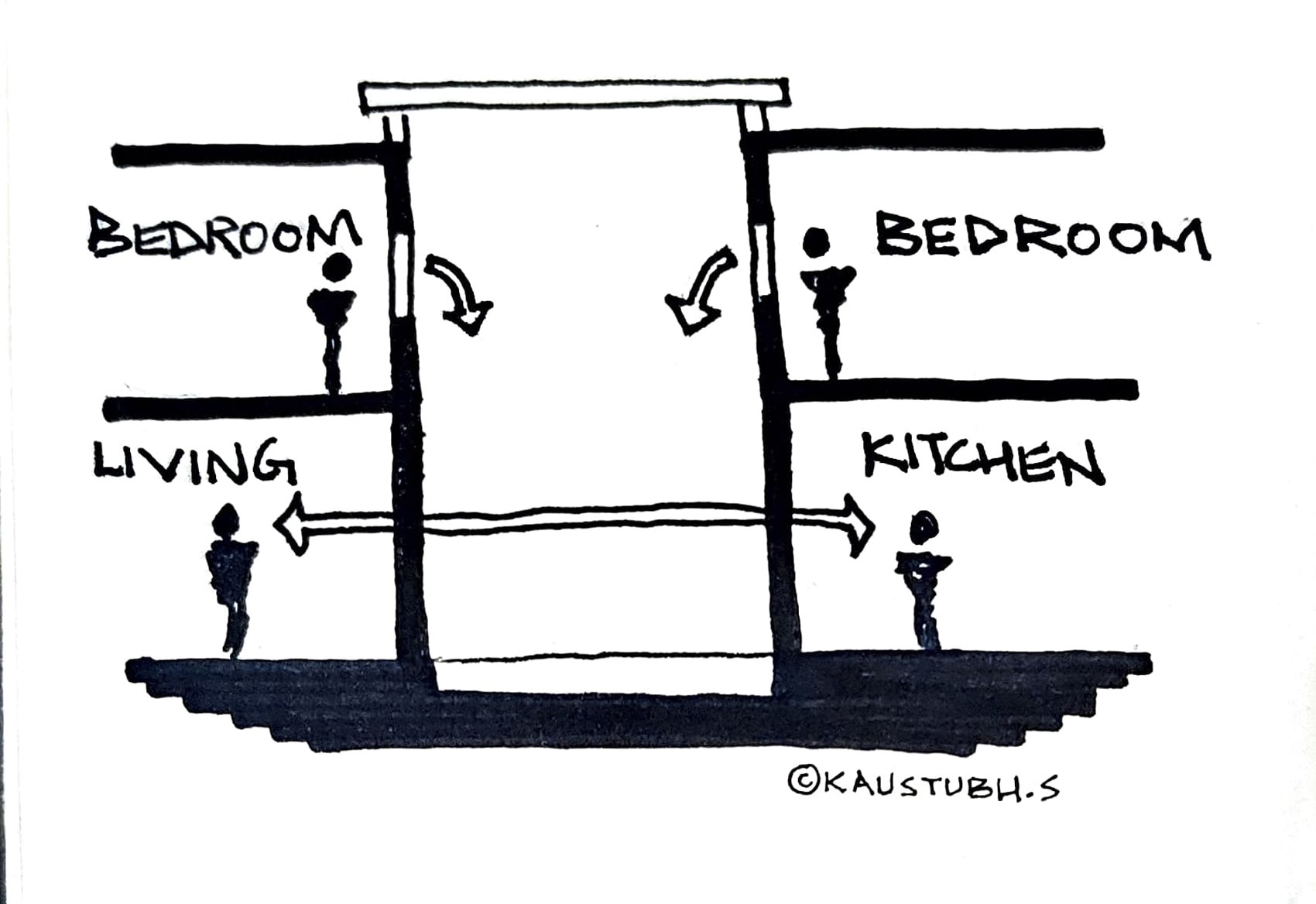
Among these, the pol houses of Ahmedabad offer a particularly powerful study. Built tightly together in dense neighbourhoods, these homes rely on internal courtyards not as embellishments but as essential lungs. Narrow streets and attached façades limit sunlight and airflow; the courtyard becomes the only place where the home inhales.
Shared rooms occupy the cooler lower levels, while private spaces overlook the void from above—connected visually, yet calibrated for comfort and privacy. This single spatial gesture negotiates climate, community, program, and circulation with remarkable clarity.
Changing Families, Changing Homes
Our contemporary lives look very different from the joint-family structures that shaped earlier courtyards. Nuclear families, smaller in number and often working long hours, drift easily into isolated routines. Devices and work commitments further separate members within the same house.
This is where design becomes intentional.
Homes today need gentle prompts that reintroduce togetherness without imposing it.
Homes today need gentle prompts that reintroduce togetherness without imposing it.
A well-placed void—open to sky or simply vertical in volume—naturally draws people into shared awareness. You hear movement. You see light shifting. You sense the presence of others without intruding on their privacy. It restores a rhythm that modern life often erodes.
Reinterpreting the Courtyard for Urban Realities
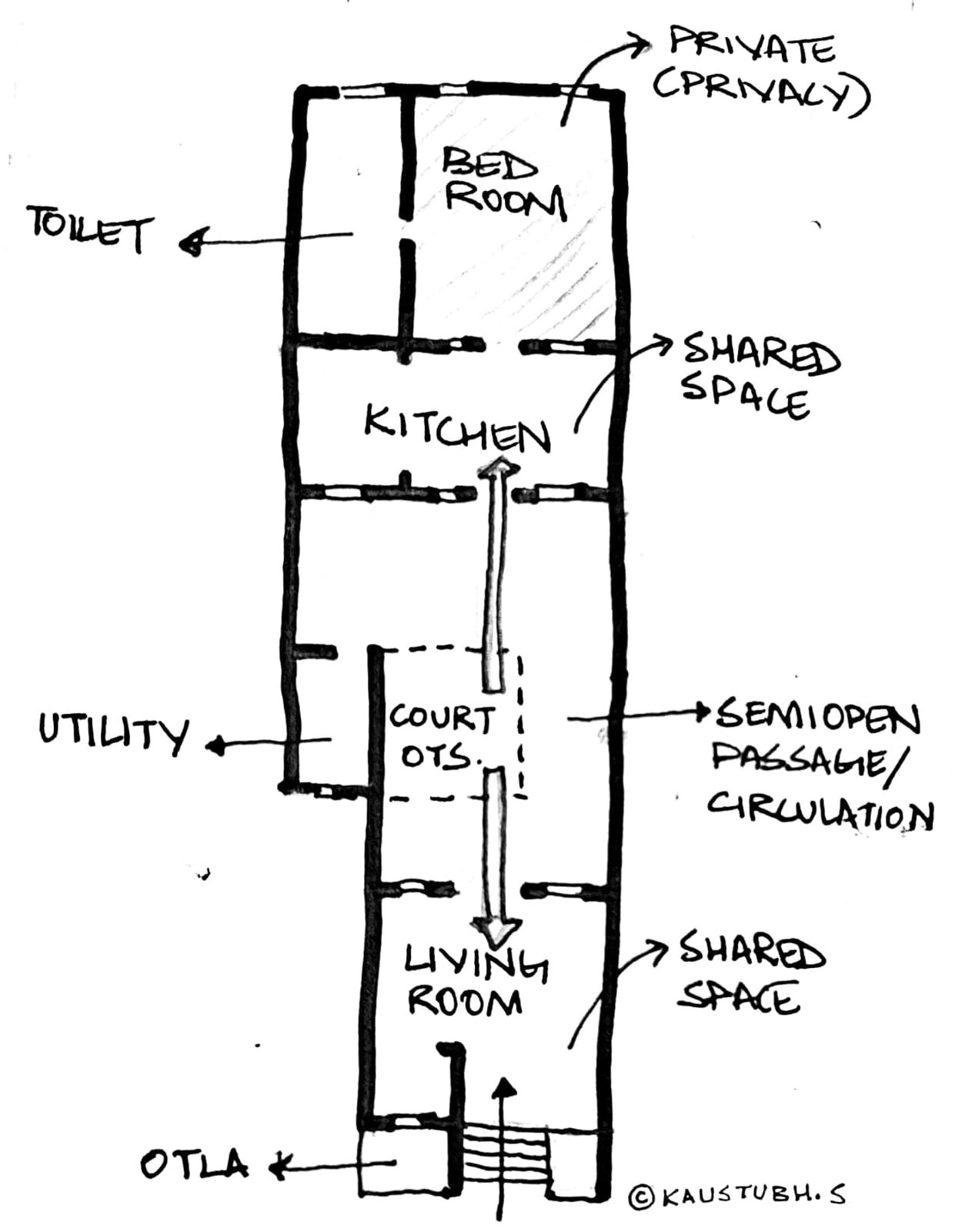
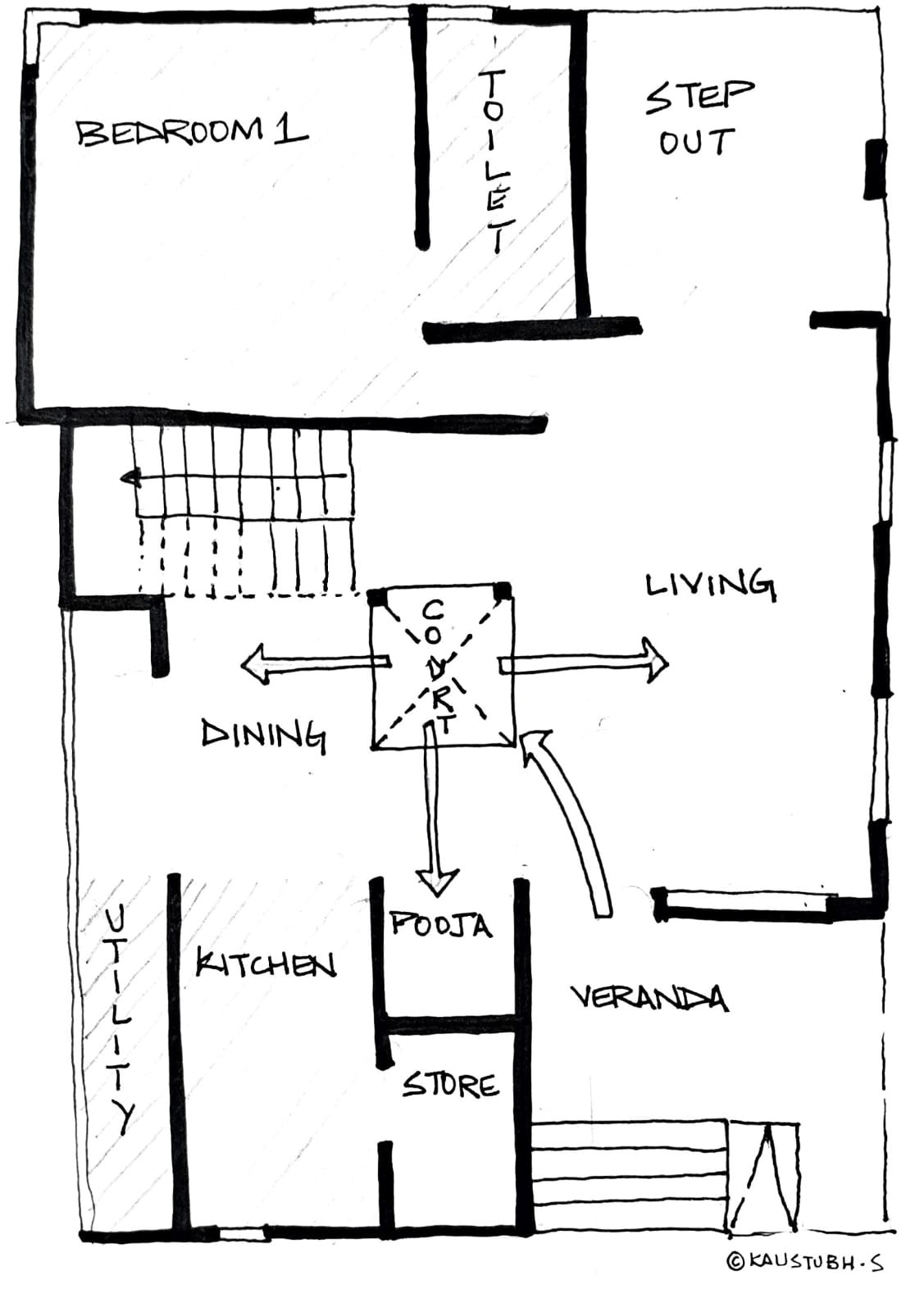
At Studio Alaya, our approach is to reinterpret the courtyard in forms that respond to contemporary constraints. Not every site allows an expansive open-to-sky space, but the idea of the courtyard—its porosity, its verticality, its ability to bind spaces—can adapt beautifully.
This may appear as:
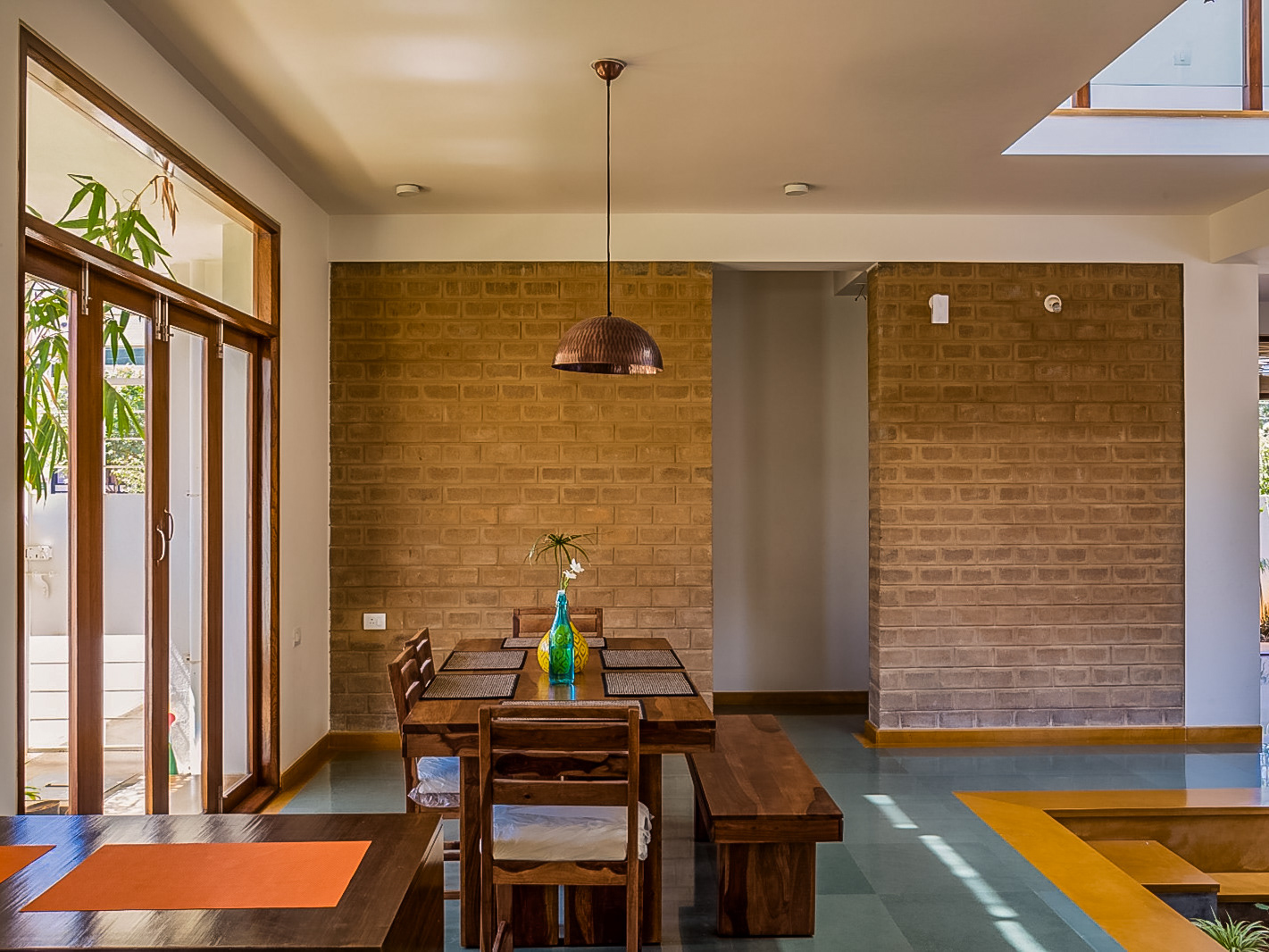
a slender double-height volume between living and dining,
a staircase lit from above, becoming an informal gathering spine,
a lightwell that draws air through the home,
a pocket of openness placed at a functional intersection.
These interventions create a spatial hierarchy—single height to double to triple—that lends depth to even compact sites. Light animates the volume through the day. Air circulates more freely. And the house begins to feel larger, calmer, and more connected.
What emerges is not a nostalgic return, but a contemporary reinterpretation grounded in climate sensitivity, spatial clarity, and human connection.
The Sky as a Quiet Constant
Indian homes have always treated the sky as a companion. The courtyard simply gave it a place within the home. Even today, when one steps into a house with a thoughtfully designed central void, the shift is immediate—the air feels different, the body relaxes, and the space seems to settle into itself.
In a world that often trends toward enclosure and speed, the courtyard continues to offer what it always has:
A moment of pause.
A breath of air.
A sense of belonging.
A breath of air.
A sense of belonging.
A reminder that good homes like good architecture
are meant to live, breathe, and bring people closer.